


Artificial intelligence (AI) has become one of the fastest-growing technologies in the modern world. From smartphones and online shopping to healthcare and banking, AI is transforming how people live and work. Businesses are using intelligent systems to improve customer experiences, automate repetitive tasks, and make faster decisions based on data. As AI continues to evolve, it is becoming more accessible to organizations of all sizes rather than being limited to large technology companies. Understanding these developments is essential for professionals, students, entrepreneurs, and anyone interested in future technology. finntechzooms regularly highlights important AI trends, helping readers understand how innovation is shaping industries and creating new opportunities. Whether it is machine learning, automation, or predictive analytics, AI is driving digital transformation across the globe. Companies that adopt AI today are better prepared to compete in an increasingly technology-driven marketplace.
Why Artificial Intelligence Is Growing Rapidly
Several factors are contributing to the rapid growth of artificial intelligence. Powerful cloud computing services, faster processors, and the availability of large datasets have made AI development easier than ever before. Machine learning models can now analyze millions of records within seconds, helping businesses identify patterns and make accurate predictions. As technology costs continue to decrease, organizations of every size can integrate AI into their operations.

According to insights shared by finntechzooms, businesses are increasingly investing in AI because it improves productivity while reducing operational costs. AI-powered chatbots provide instant customer support, recommendation engines personalize online shopping, and intelligent automation handles repetitive office tasks. These improvements save time and allow employees to focus on strategic work. Governments are also supporting AI research through funding and policy initiatives, recognizing its importance for economic development and innovation.
Major AI Trends in 2026
Artificial intelligence continues to evolve, introducing new technologies that improve efficiency and business performance. Some of the most important AI trends include:
- Generative AI for creating content and designs
- AI-powered automation in business operations
- Predictive analytics for smarter decisions
- AI cybersecurity solutions
- Personalized customer experiences
These trends are changing how companies operate and deliver services. Businesses adopting these technologies are improving efficiency while creating better experiences for customers.
AI in Business and Digital Transformation
Businesses across industries are embracing AI to remain competitive in today’s digital economy. Retail companies use AI to recommend products based on customer preferences, while financial institutions rely on intelligent algorithms to detect fraud and manage investment portfolios. Manufacturing companies implement AI-powered robots to improve production accuracy and reduce waste.
finntechzooms explains that digital transformation is no longer just about adopting new software. Instead, organizations are integrating AI into every stage of business operations. Marketing teams use AI to analyze consumer behavior, customer service departments deploy virtual assistants, and supply chain managers use predictive analytics to improve inventory management. These innovations increase productivity while reducing costs and improving customer satisfaction.
AI Applications Across Industries
Artificial intelligence is improving nearly every major industry. Healthcare organizations use AI to detect diseases earlier, analyze medical images, and assist doctors in treatment planning. Educational institutions use AI-powered learning platforms to personalize lessons for students based on their performance and learning speed.
Financial companies employ AI to identify fraudulent transactions and assess financial risks more accurately. Agriculture benefits from intelligent monitoring systems that improve crop production and detect diseases before they spread. Transportation companies optimize delivery routes with AI, reducing travel time and fuel consumption.
According to finntechzooms, the widespread adoption of AI demonstrates its flexibility and long-term value. As more industries embrace intelligent technologies, AI will continue driving innovation and economic growth around the world.
Challenges and Ethical Considerations of AI
Although artificial intelligence offers numerous advantages, it also introduces important challenges. One major concern is data privacy, as AI systems require large amounts of information to learn and improve. Businesses must ensure that customer data is collected, stored, and processed securely. Another challenge is algorithmic bias. If AI models are trained using incomplete or biased data, the results may be unfair or inaccurate. Organizations should regularly evaluate AI systems to improve transparency and fairness. Job automation is another concern, as some repetitive tasks are being replaced by AI. However, new career opportunities are also emerging in AI development, machine learning, cybersecurity, and data science. finntechzooms emphasizes that responsible AI development requires ethical standards, government regulations, and continuous monitoring to ensure technology benefits society while minimizing risks.
Future of Artificial Intelligence
The future of AI looks promising as innovation continues at a rapid pace. Generative AI will become more advanced, enabling businesses to create high-quality content, software, and product designs with greater efficiency. Healthcare is expected to benefit from AI-assisted diagnosis, personalized treatment plans, and robotic surgeries. Financial institutions will continue using AI for fraud detection, investment analysis, and customer service automation. Smart cities will rely on AI to improve traffic management, energy efficiency, and public safety. Edge AI, which processes data directly on devices instead of centralized servers, will make applications faster and more secure. According to finntechzooms, AI will become deeply integrated into everyday life, making digital services smarter, more personalized, and more efficient for both businesses and consumers.
AI Skills for the Future Workforce
As AI adoption increases, professionals need new skills to remain competitive. Learning AI-related technologies not only improves career opportunities but also helps employees adapt to changing workplace demands.
Key skills include:
- Machine learning basics
- Data analysis
- Prompt engineering
- Critical thinking
- Digital literacy
Organizations are investing in employee training so teams can effectively work alongside AI tools. Combining technical knowledge with creativity and problem-solving abilities will remain valuable in the future job market.
AI Trends Comparison Table
| AI Trend | Main Purpose | Common Industries |
|---|---|---|
| Generative AI | Content creation | Marketing, Media |
| Machine Learning | Data prediction | Finance, Healthcare |
| Natural Language Processing | Language understanding | Customer Support |
| Computer Vision | Image recognition | Manufacturing, Healthcare |
| AI Automation | Process optimization | Business Operations |
Benefits of Artificial Intelligence
AI provides measurable benefits across industries by improving efficiency and supporting better decision-making.
Major benefits include:
- Higher productivity
- Faster decision-making
- Reduced operational costs
- Better customer experience
- Stronger cybersecurity
These advantages explain why organizations continue investing in AI technologies across multiple sectors.
AI in Everyday Life
Artificial intelligence has become a part of everyday life, often working in the background without users noticing. Voice assistants answer questions, navigation apps calculate the fastest routes, streaming platforms recommend movies, and online stores suggest products based on previous purchases. AI also improves email filtering, language translation, facial recognition, and smart home automation. These everyday applications save time and make technology more convenient.
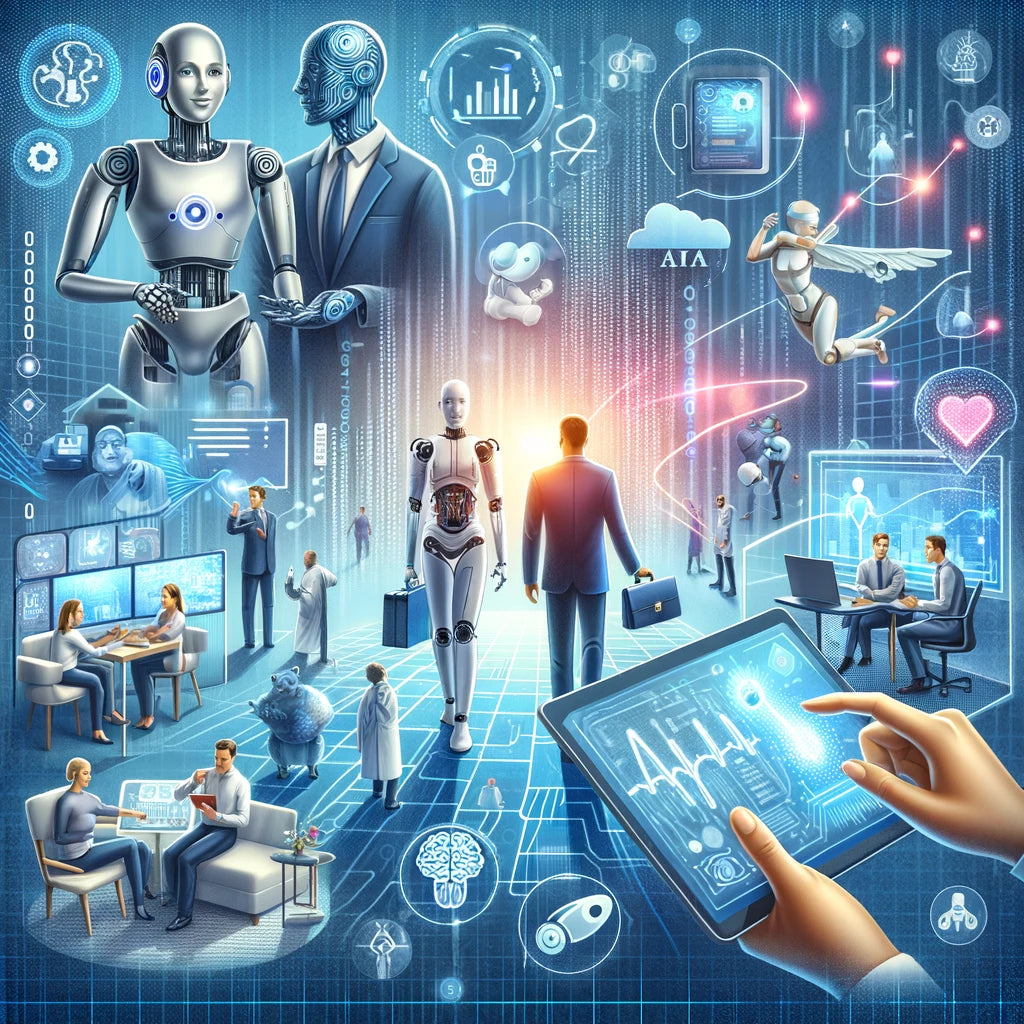
As highlighted by finntechzooms, AI is becoming increasingly accessible to individuals and businesses alike. Small companies can now use cloud-based AI tools for customer service, marketing, and data analysis without requiring large investments. This accessibility is helping accelerate digital transformation across every industry.
Conclusion
Artificial intelligence is transforming the way businesses operate and how people interact with technology. From healthcare and finance to education and manufacturing, AI is improving efficiency, reducing costs, and supporting innovation across countless industries. As AI technologies continue to evolve, organizations that embrace responsible adoption will gain significant competitive advantages.
Read more: Crypto News by finntechzooms